
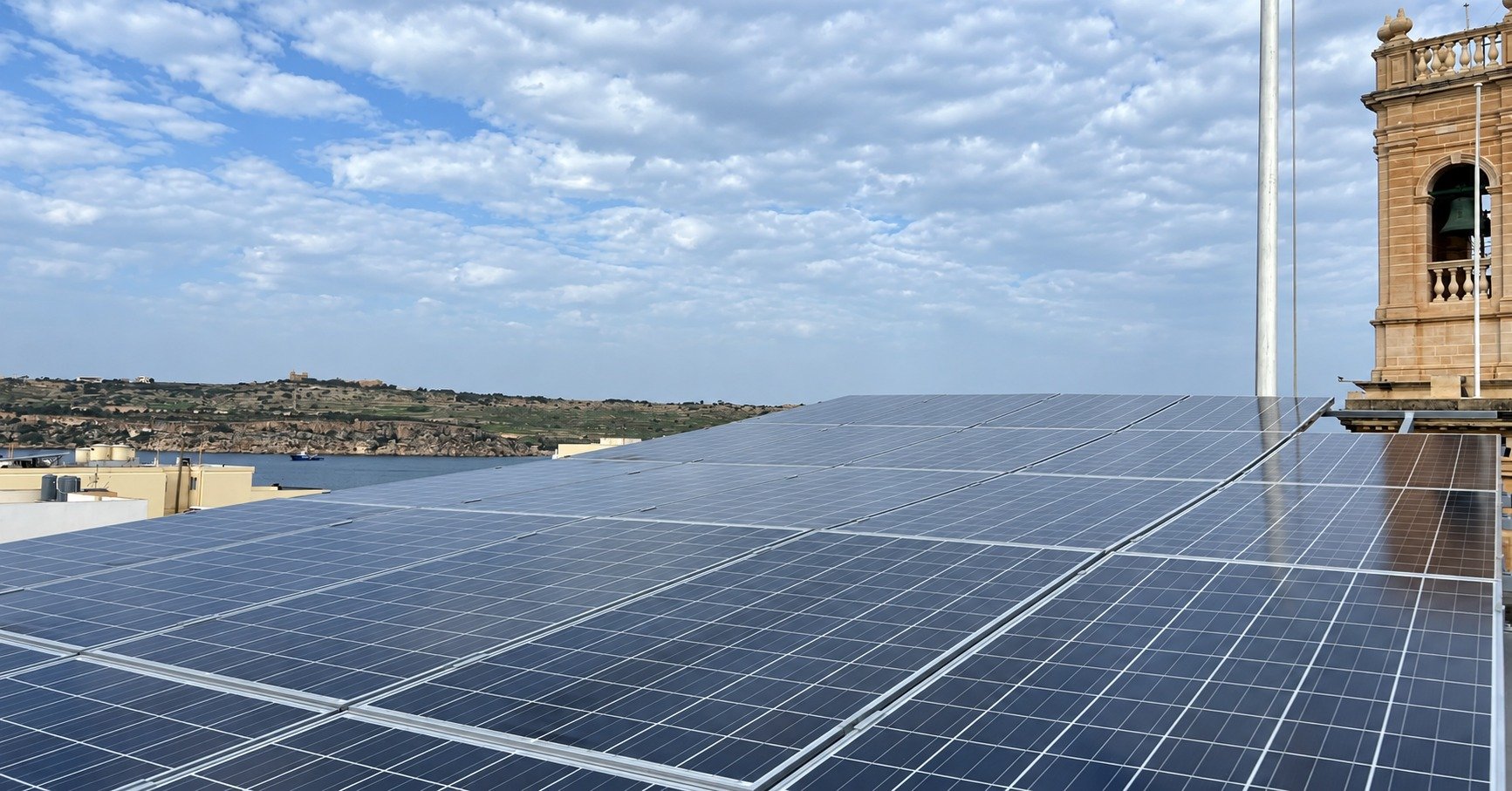
If you own a rental property in Malta with its own roof and the necessary roof and airspace rights, solar panels can turn unused space into a productive asset. The opportunity is straightforward: reduce electricity you pay for, earn eligible export income, or make the property more attractive through lower running costs. The best return depends on who holds the electricity account, who pays the bills and how the system is connected.
Where does the financial benefit go?
The investment model considered here is a landlord-owned solar installation where tenants remain responsible for measured electricity consumption and the landlord retains the solar system’s financial benefit. With an approved full-export arrangement, for example, the landlord can receive eligible generation income while tenants continue paying for electricity supplied to the property. That makes the roof an additional productive asset alongside the rental itself. Where the proposal instead involves solar reducing electricity purchased through a landlord-managed account, the right to recover consumption charges and retain the resulting benefit must be established for that specific metering and lease arrangement.
Holiday rentals and long-term residential lets also have different legal and consumption patterns. Daytime cooling, water heating and other genuine daytime loads can help match demand to solar generation. Electricity generated while the property is empty may instead be exported under the approved arrangement. A solar assessment should therefore start with bills, occupancy and the proposed metering, not simply the number of panels that fit.
How to maximise the return from your roof space
A productive roof is about useful annual output per euro invested, rather than covering every available metre. Confirm title, roof access and the right to install and maintain equipment first. Owning airspace does not, by itself, settle every structural, planning or common-property issue.
The layout should account for parapet shadows, neighbouring buildings, water tanks, lift rooms, maintenance access and drainage. Compare panel dimensions, orientation and tilt against the usable roof, and allow for wind loading and the roof’s condition. Repairing waterproofing before installation can avoid the cost of dismantling panels later. A larger panel is not always the best fit if its dimensions create unusable gaps or shaded rows.
Ask for a comparison of layouts using predicted annual generation, total installed cost and the value of self-consumption versus export. A battery can move surplus generation into evening use, but it adds cost and losses, so its payback should be evaluated separately. Explore our solar solutions and battery storage options as part of a complete property assessment.
What is the payback time per solar panel?
Payback per panel is a useful way to understand the investment, provided the cost includes that panel’s share of the entire installation. Dividing only the panel purchase price by annual generation leaves out the inverter, mounting, electrical work, labour and other project costs. Simple payback is the allocated installed cost divided by the annual net financial benefit attributable to that panel.
Consider a purely illustrative 450 W panel. At an assumed annual yield of 1,500 kWh per installed kWp, it would generate 675 kWh a year: 0.45 kWp multiplied by 1,500. This yield is an example, not a forecast for your roof. A site-specific estimate should use location, shading, orientation, tilt and system losses, for example through the European Commission’s PVGIS tool.
If all 675 kWh were eligible for an assumed €0.15 per kWh export payment, the gross annual income would be €101.25. Deducting an illustrative €15 annual maintenance and replacement reserve per panel gives €86.25 a year before tax and financing. At an allocated installed cost of €450, simple payback would be approximately 5.2 years. At €600, it would be approximately 7 years. These are hypothetical calculations, not Renewable Living Limited quotations or guaranteed returns.
For twelve equivalent panels, those same assumptions give a 5.4 kWp system producing 8,100 kWh annually, €1,215 gross export income and €1,035 after the illustrative €180 annual reserve. An assumed €7,200 installed cost would again give approximately 7 years’ simple payback. Real quotations must include the applicable VAT treatment and all installation costs. Tax, financing, output degradation, outages and actual maintenance or inverter replacement costs can extend payback; the reserve used here is only a budgeting assumption.
Self-consumption and export must be calculated separately
Each unit of electricity can either offset an eligible on-site purchase or earn an export payment under the chosen arrangement. It cannot deliver both benefits at once. For a mixed system, annual gross value is self-consumed kWh multiplied by the electricity cost actually avoided, plus exported kWh multiplied by the applicable export tariff. Deduct operating costs to estimate the net benefit. If tenants receive the bill savings, do not count those same savings as the landlord’s income.
Which Malta feed-in tariff applies?
As checked on 31 October 2026, REWS lists a 2026 scheme offering €0.15 per kWh for 20 years for qualifying residential and non-residential systems from 1 kWp to below 40 kWp without grant or other de minimis capital support. It covers new approvals from 1 January to 30 November 2026, subject to scheme capacity and conditions. Paid annual units are capped at installed kWp multiplied by 1,600. Eligibility and availability must be confirmed before investment; this is not an automatic entitlement for every rental roof.
A grant-supported installation can fall under different tariff terms. Do not combine a grant with an unsupported-system tariff in a payback calculation unless your actual approval allows it. Check the REWS feed-in tariff guidance and published scheme table for the applicable conditions.
Make the roof part of your rental property strategy
Solar can improve a rental property’s economics when ownership rights, the electricity account, tenant arrangements and the system design work together. The aim is a roof that produces a measurable return, with transparent billing and realistic costs. Renewable Living Limited can assess the available space, compare suitable layouts and prepare a property-specific generation and payback estimate. Contact our team to discuss solar for your rental property in Malta or Gozo.
Prepared for Eco-Log, 31 October 2026. Financial examples are illustrative and exclude financing and tax. Scheme rules and utility arrangements should be checked for the individual property before proceeding.